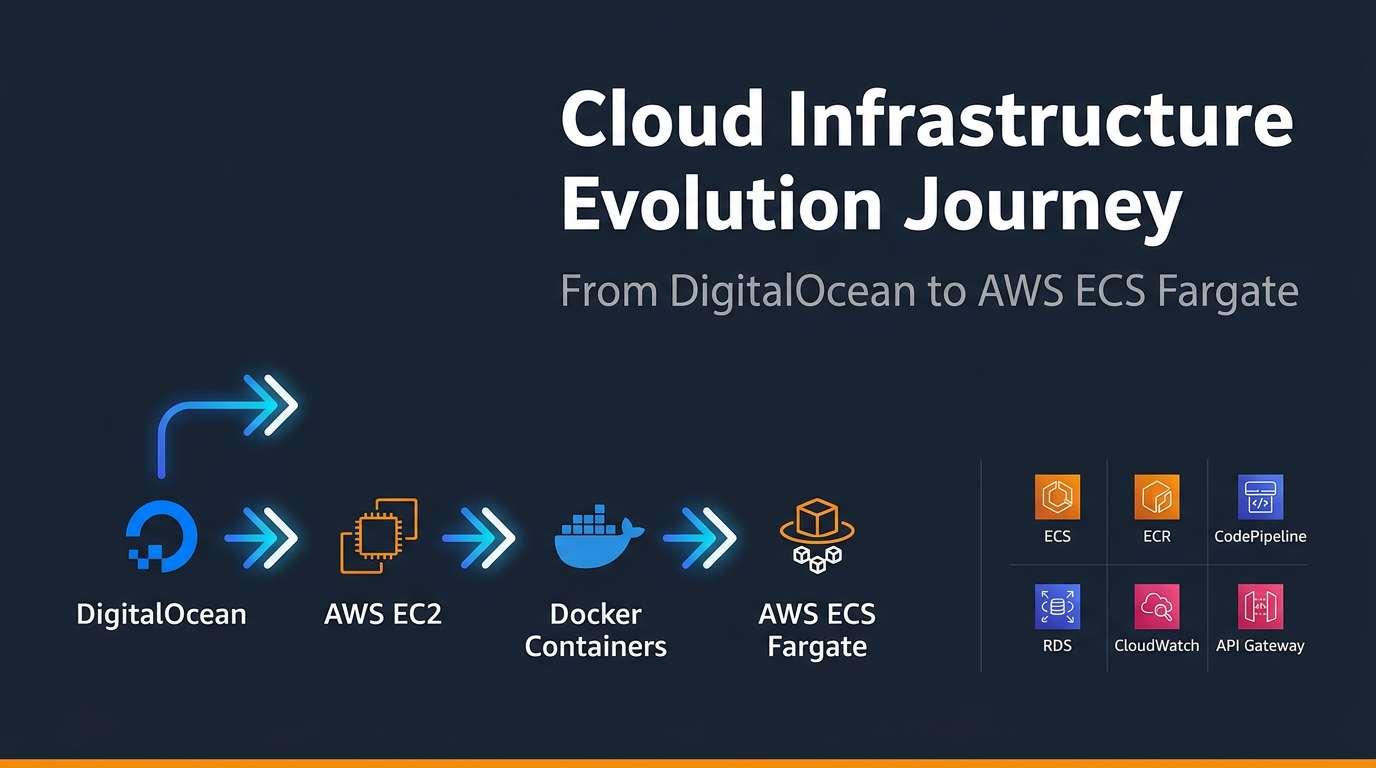
Zero Downtime, Zero Compromise: How We Moved a Live Platform from DigitalOcean to AWS ECS Fargate

Zero Downtime, Zero Compromise: How We Moved a Live Platform from DigitalOcean to AWS ECS Fargate

Phase 1: The Starting Point — DigitalOcean Hosting 

Infrastructure Overview 

Customer initial production environment was hosted on DigitalOcean Droplets — Linux-based virtual machines running the application directly on the host OS. While DigitalOcean offered simplicity and low initial cost, this setup quickly revealed significant limitations as customer scaled its client operations. 

Challenges Encountered 

Operational Bottlenecks 

  • Client feedback highlighted noticeable delays in receiving critical application updates, raising concerns about responsiveness and SLA adherence. 
  • Latency issues were observed in application response times and data loading, directly impacting end-user satisfaction. 

Infrastructure Rigidity 

  • DigitalOcean supports only Linux-based environments, limiting the flexibility needed for applications that may require a Windows-compatible runtime. 
  • Container orchestration capabilities were absent, making it difficult to manage application dependencies consistently across environments. 

Manual Deployment Burden 

  • Deployments relied entirely on manual scripts and custom tooling. 
  • Each release cycle required 1–2 engineers dedicating 6–7 hours per week solely for deployment oversight and maintenance. 
  • This manual approach introduced a high risk of human error and created deployment inconsistencies across environments.

Phase 2: Migration to AWS EC2 

Why EC2? 

As a first step toward modernization, Cogniv Technologies recommended migrating the customer workload to AWS EC2 (Elastic Compute Cloud). This move provided our customer with enterprise-grade infrastructure, deeper managed service integrations, and the foundation needed to adopt containerization in the next phase. 

What Changed 

  • The application was rehosted on EC2 instances within a properly architected AWS VPC, with security groups, subnets, and a NAT Gateway enforcing network isolation and security best practices. 
  • AWS RDS for MySQL replaced the self-managed database, offloading patching, backup automation, and storage scaling to AWS — allowing the team to focus on application development rather than database administration. 
  • AWS CloudTrail was enabled to capture a full audit trail of API activity across the account, supporting compliance and operational governance from day one. 
  • Amazon CloudWatch was configured for centralized logging, metrics collection, and alerting across all services. 
  • AWS Route 53 was used for DNS management, enabling reliable domain routing and health-check-based failover. 

Improvements Gained 

  • Eliminated DigitalOcean’s Linux-only platform constraint, opening the path to broader runtime support. 
  • Gained access to the full AWS service ecosystem for future integrations. 
  • Centralized monitoring and auditing replaced fragmented, manual log management. 
  • Database reliability improved significantly with RDS automated backups and multi-AZ capability. 

Remaining Gaps 

While the EC2 migration addressed infrastructure maturity, several challenges persisted: 

  • Applications still ran directly on EC2 instances without containerization, meaning environment inconsistencies between development and production remained. 
  • Deployment was still largely manual, continuing to consume significant engineering time. 
  • Scaling required manual intervention or basic Auto Scaling configurations, without fine-grained container-level resource management. 

 Phase 3: Containerization with Docker on EC2 

Adopting Docker 

To address environment consistency and dependency management, Cogniv Technologies led the effort to containerize the customer application using Docker. All application components were packaged into Docker images, with container images stored securely in Amazon ECR (Elastic Container Registry). 

What Changed 

  • Application workloads were containerized and deployed as Docker containers running on EC2 instances. 
  • Amazon ECR served as the private image registry, replacing any ad-hoc image storage and ensuring version-controlled, immutable container artifacts. 
  • Docker Compose was used to manage multi-container deployments locally and in staging environments, improving developer workflow consistency. 

Benefits Unlocked 

  • Environment Parity: Containers encapsulate all application dependencies, eliminating the classic “works on my machine” problem across development, staging, and production. 
  • Faster Onboarding: New engineers could spin up the full application stack locally using a single Docker command. 
  • Image Versioning: ECR enabled strict version control of container images, making rollbacks straightforward. 

Remaining Challenges 

Despite containerization benefits, managing Docker containers on EC2 still required: 

  • Manual EC2 instance management — patching, capacity planning, and instance health monitoring. 
  • No native service discovery, making inter-container communication in a microservices setup cumbersome. 
  • Scaling containers still required EC2-level intervention, not container-level auto-scaling. 
  • The deployment process, though improved, still lacked full automation and required engineer oversight. 

 Phase 4: Full Modernization — AWS ECS Fargate with CI/CD Automation 

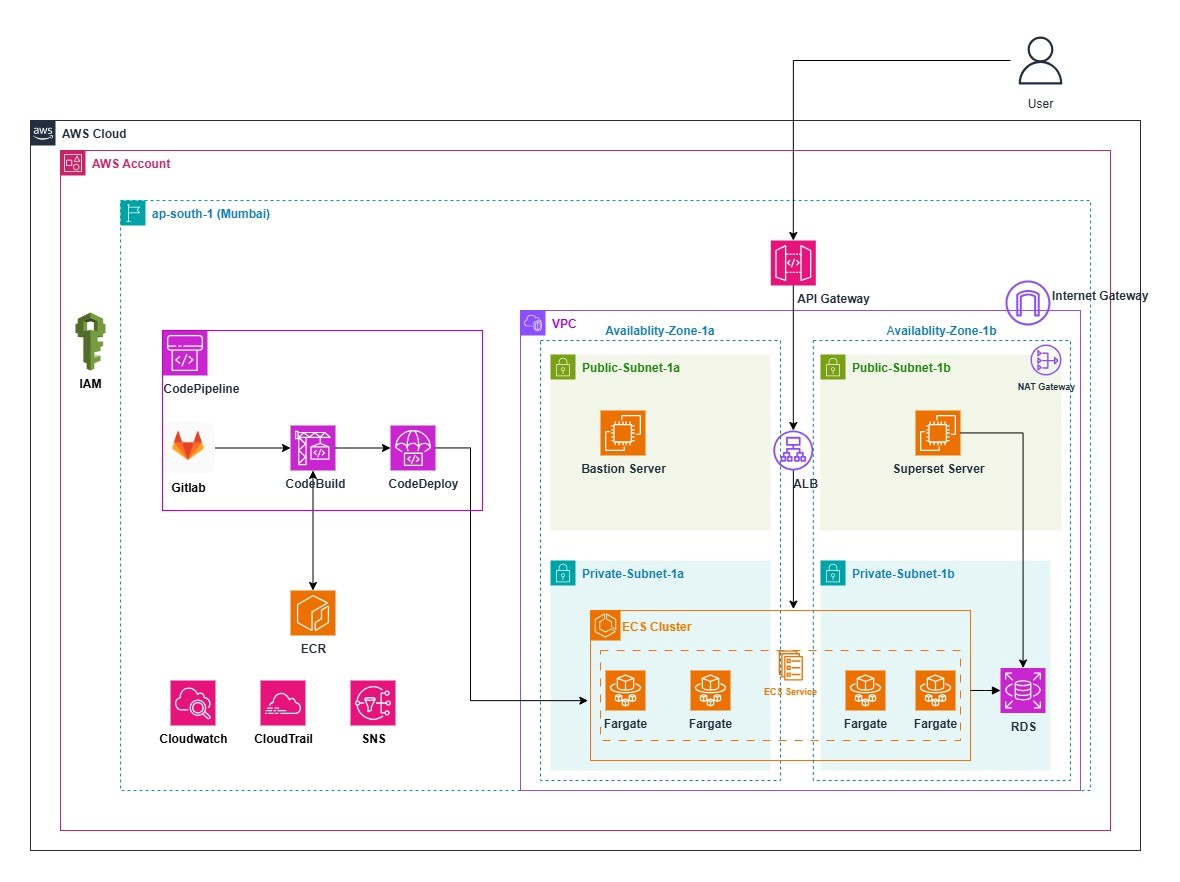
The Final Architecture 

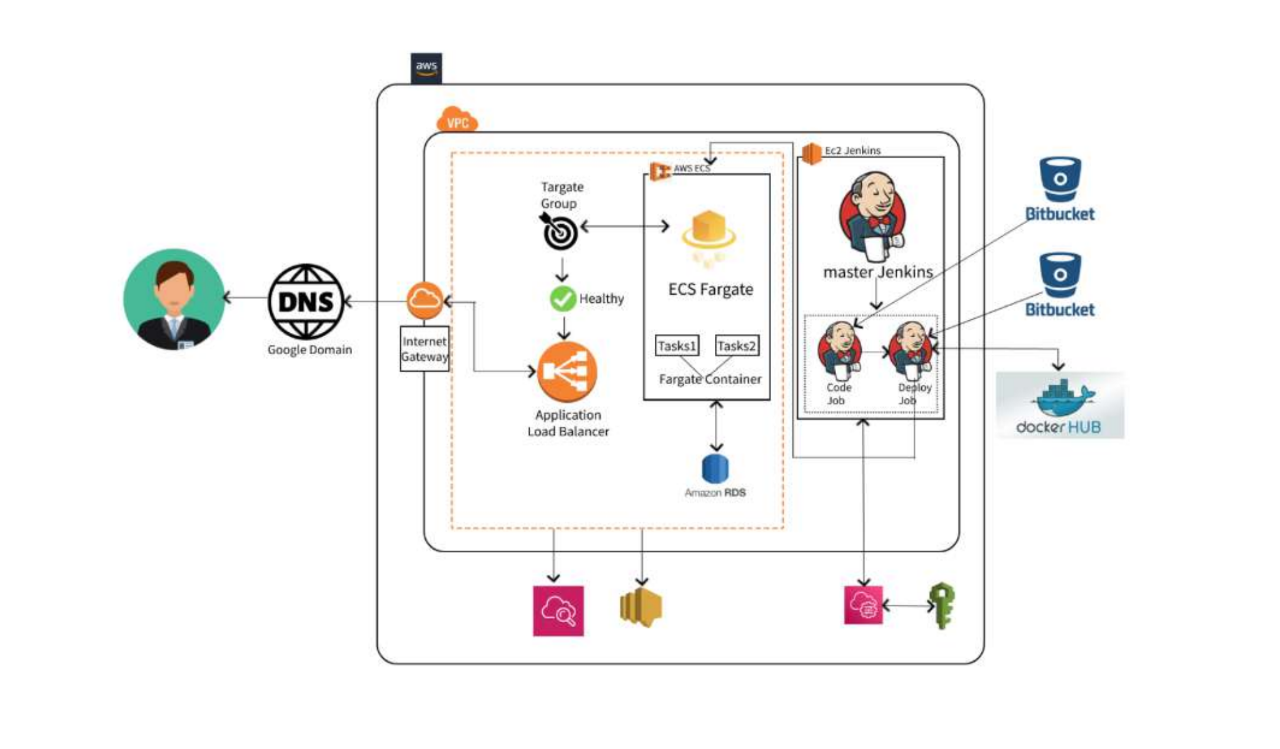
To eliminate the remaining infrastructure management overhead and fully automate the software delivery lifecycle, Cogniv Technologies migrated customer to AWS ECS Fargate  a serverless container orchestration service. This final phase consolidated all prior improvements into a cohesive, production-grade, fully managed architecture. 

Core Solution Components 

ECS Fargate — Serverless Container Hosting 

AWS ECS Fargate removes the need to provision or manage EC2 instances. Customer’s containers run in a fully managed serverless environment where AWS handles host-level patching, capacity, and scaling infrastructure. 

  • Blue/Green Deployment strategy was implemented via AWS CodeDeploy, enabling zero-downtime releases by running two identical environments in parallel and seamlessly shifting traffic only after the new version passes health checks. 
  • Deployment efficiency improved by approximately 99%, with zero downtime recorded across all production releases post-migration. 
  • ECS Service Discovery allows containers to communicate seamlessly within the VPC, enabling a clean microservices communication pattern without hardcoded endpoints. 

AWS CodePipeline — Fully Automated CI/CD 

A complete CI/CD pipeline was built using AWS CodePipelineCodeBuild, and CodeDeploy, automating the entire software delivery lifecycle from code commit to production deployment.

Deployment Metrics Post-Automation: 

  • End-to-end deployment duration: ~8 minutes from code commit to live traffic 
  • Engineering time saved: ~3 hours per week per engineer 
  • Deployment downtime: 0% 
  • Manual deployment steps: Eliminated entirely 

AWS API Gateway — Centralized API Management 

API Gateway acts as the unified entry point for all backend services, handling: 

  • Authentication and authorization enforcement 
  • Request and response transformation 
  • Throttling and rate limiting to prevent abuse 
  • Caching for improved response performance 
  • Centralized API lifecycle management 

This replaced direct EC2/container endpoint exposure, significantly improving the security posture and providing a consistent, manageable interface to customers distributed services. 

Amazon RDS — Fully Managed Relational Database 

Amazon RDS for MySQL continued from Phase 2, now more deeply integrated within the VPC and ECS networking fabric. AWS manages automated backups, software patching, storage auto-scaling, and failover — freeing the engineering team entirely from database infrastructure concerns. 

AWS CloudTrail — Governance and Audit 

CloudTrail captures a comprehensive, tamper-evident log of all API activity across the AWS environment. Events are stored in Amazon S3 for long-term archiving and integrated with CloudWatch for real-time security alerting — supporting internal compliance, operational auditing, and external regulatory requirements. 

Amazon CloudWatch — Unified Observability 

CloudWatch provides centralized monitoring across all services — ECS task metrics, RDS performance, API Gateway request rates, and CodePipeline execution status. Proactive alerting ensures the team is notified of anomalies before they impact end users. 

Lessons Learned 

Containerization Standardizes the Delivery Pipeline 

Adopting Docker and Amazon ECS introduced consistency across development, staging, and production environments. Packaging applications as immutable container images eliminated environment drift and made rollbacks trivially straightforward — simply redeploy the previous ECR image version. 

Incremental Migration Reduces Risk 

Rather than a single “lift-and-shift” migration, customer’s phased approach — DigitalOcean → EC2 → Docker → ECS Fargate — allowed each improvement to be validated before the next was introduced. This minimized risk, maintained continuity of client service, and allowed the engineering team to build confidence at each stage. 

Automation Is a Force Multiplier 

Implementing CI/CD with CodePipeline transformed how customers delivers software. What previously required hours of manual engineer effort now executes in eight minutes without human intervention. The elimination of manual steps directly reduced deployment errors and freed engineers to focus on product development rather than release management. 

Serverless Containers Are the Right Abstraction for Most Teams 

ECS Fargate proved that managing EC2 infrastructure is unnecessary overhead for application teams. By abstracting away host-level concerns, Fargate allowed customer’s engineers to operate at the container level the right abstraction for modern application delivery.

Final Architecture Diagram:
 

Leave a Reply

Your email address will not be published. Required fields are marked *

Latest Post


Key Results at a Glance


Executive Summary

As organizations scale their digital operations, the demand for reliable, high-performance, and secure cloud infrastructure becomes non-negotiable. Naga, a technology-driven organization running business-critical workloads on AWS, faced growing pains common to fast-scaling teams — infrastructure that could not keep pace with demand, reactive monitoring practices, and security configurations that introduced unnecessary risk.

Cogniv Technologies partnered with Naga to redesign and optimize their AWS environment from the ground up. Leveraging AWS Well-Architected best practices, Cogniv delivered a modern, resilient architecture spanning automated scaling, multi-availability zone redundancy, layered security, and comprehensive operational visibility. The result was a measurably stronger platform that supports Naga’s current workloads and positions the organization for continued growth.

About the Customer

Naga is a technology and cloud services organization that depends on AWS to host and deliver business-critical application workloads. With a growing customer base and increasing complexity in its operational environment, Naga required a cloud infrastructure capable of handling variable demand reliably while maintaining strong security and operational control.

The Challenge

Before engaging Cogniv Technologies, Naga’s AWS environment faced two fundamental challenges that were limiting performance, increasing risk, and creating unnecessary operational burden.

Challenge 1: Scalability and Performance Under Peak Load

Naga’s infrastructure relied on manual capacity management. During periods of high user demand, this approach led to performance degradation as the environment could not respond quickly enough to sudden increases in traffic. Conversely, during quieter periods, resources remained over-provisioned, leading to avoidable cloud spend. There was no automated mechanism to align compute capacity with actual workload in real time, leaving the operations team constantly reacting rather than proactively managing the environment.

Challenge 2: Monitoring, Backup, and Security Gaps

The team operated with reactive monitoring — issues were identified only after users reported degraded experiences or system failures. Backup policies were incomplete, leaving certain data assets without adequate protection. Security groups were broadly defined, expanding the attack surface unnecessarily. IAM configurations lacked granularity, granting more permissions than individual services required. Together, these gaps created operational fragility and compliance risk that needed to be addressed before further growth.

The Solution

Cogniv Technologies designed and implemented a comprehensive AWS architecture that addressed each challenge systematically, applying AWS Well-Architected principles across the five pillars of operational excellence, security, reliability, performance efficiency, and cost optimization.

Amazon EC2 with Auto Scaling

Right-sized EC2 instances were deployed within Auto Scaling groups configured with dynamic scaling policies. Policies are triggered by CPU utilization and Application Load Balancer request count metrics, enabling the environment to adjust capacity automatically and in real time. This eliminates manual intervention during traffic spikes and prevents over-provisioning during low-demand periods.

Application Load Balancer

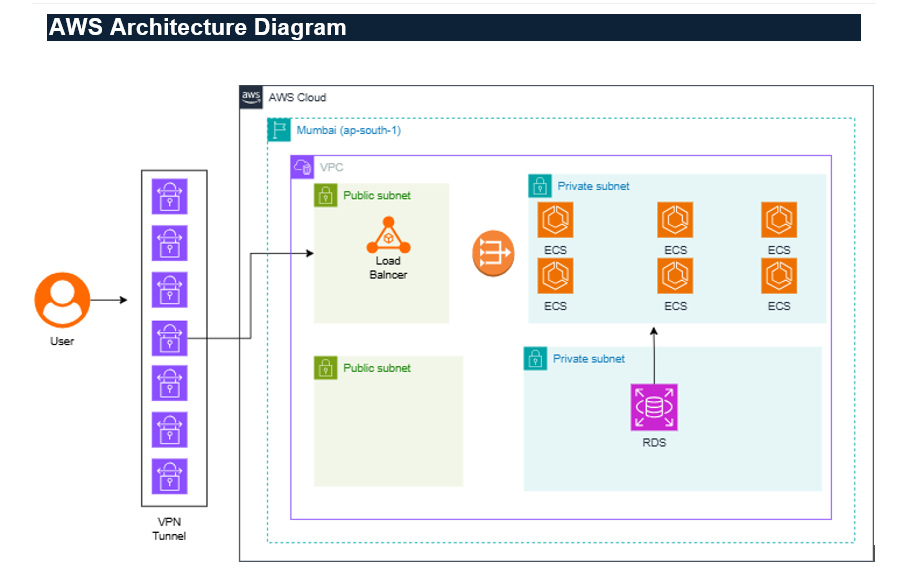
An Application Load Balancer was deployed to distribute HTTP and HTTPS traffic across EC2 instances spanning multiple Availability Zones. Health checks continuously monitor target availability, automatically routing traffic away from unhealthy instances. This ensures that no single instance failure degrades the user experience.

Amazon RDS Multi-AZ with Read Replicas

A managed relational database was deployed in a Multi-AZ configuration, providing automatic failover in the event of a primary instance failure. Seven-day automated backup retention ensures data protection and recovery capability. Read replicas were introduced to offload read-heavy query workloads from the primary instance, improving overall database performance and reducing response times for application queries.

VPC Architecture with Least-Privilege IAM

The network was restructured with dedicated public and private subnets per application tier, enforcing logical separation between internet-facing and internal components. Security Group rules were tightened to enforce least-privilege access, reducing the attack surface across all tiers. Per-service IAM roles were introduced, ensuring that each component operates with only the permissions it requires. This layered approach to security creates defense-in-depth across the entire environment.

Amazon CloudWatch

A unified monitoring layer was implemented using CloudWatch, including custom dashboards, metric-based alarms, and structured log groups. This provides the operations team with real-time visibility into application and infrastructure health, enabling proactive detection and faster response to operational events.

AWS Backup and Amazon S3

Policy-driven automated backup schedules were implemented for RDS instances and EBS volumes using AWS Backup. Amazon S3 was configured with lifecycle policies, server-side encryption, and versioning to provide a secure and cost-efficient object storage layer for the environment.

Architecture Highlights

Multi-AZ High Availability
Application and database tiers span multiple Availability Zones, eliminating single points of failure and ensuring uninterrupted service availability during Availability Zone-level disruptions.

Auto Scaling Elasticity
EC2 capacity adjusts dynamically based on real-time demand signals. The environment scales out during traffic peaks and scales in during quiet periods, delivering consistent performance without cost waste.

Defense-in-Depth Security
Private-subnet network isolation, tightened Security Group rules, and per-service IAM roles enforce layered security controls across every tier of the architecture.

Comprehensive Observability
CloudWatch dashboards and alarms provide full visibility into system health and performance, reducing mean time to detection and enabling proactive incident response before users are impacted.

Results and Business Impact

The redesigned AWS environment delivered measurable improvements across performance, reliability, security, and operational efficiency.

Outcome Result
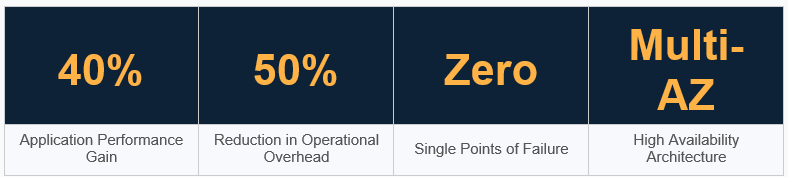
Application Performance 40% improvement through right-sized EC2, ALB traffic distribution, and RDS read replicas
Operational Overhead Approximately 50% reduction through automated backups, patching, and failover
High Availability Zero single points of failure across all tiers with Multi-AZ architecture
Security Posture Significantly hardened through VPC isolation, tightened Security Groups, and least-privilege IAM
Operational Visibility Full observability via CloudWatch dashboards and alarms, reducing mean time to detection
Cost Efficiency Measurable monthly spend reduction through EC2 right-sizing, Reserved Instance recommendations, and S3 lifecycle policies

Key Architecture Decisions That Made the Difference

The success of this engagement was rooted in a set of deliberate architectural decisions that prioritized long-term operational health over short-term convenience.

Deploying Auto Scaling and Multi-AZ from the outset eliminated the need for manual scaling intervention and guaranteed database resilience without operator involvement. Establishing CloudWatch as a foundational requirement — not an afterthought — gave the operations team the visibility needed to move from reactive to proactive management. Defining VPC subnet boundaries and IAM roles early in the engagement reduced the complexity of security reviews and future compliance validation.

Lessons Learned

This engagement reinforced several best practices that Cogniv Technologies now applies as standard across all AWS infrastructure engagements.

  • Build Auto Scaling and Multi-AZ redundancy into the initial architecture. Retrofitting these capabilities into an existing live environment is significantly more complex and risk-prone than implementing them from the start.

  • Treat CloudWatch as a foundational infrastructure component. Reactive monitoring consistently prolongs application degradation and delays incident resolution.

  • Define VPC subnet boundaries and tier separation early. Clear network segmentation simplifies both security reviews and ongoing compliance requirements.

  • Invest in IAM role design and Security Group definition at the beginning of an engagement. Overly permissive configurations are difficult to tighten after the fact without risking disruption to running workloads.

About Cogniv Technologies

Cogniv Technologies is an AWS Advanced Tier Partner specializing in cloud infrastructure design, application hosting, DevOps, FinOps, data management, and cloud-based communication solutions. The team brings deep AWS expertise and a consistent commitment to delivering Well-Architected, secure, and cost-optimized cloud environments for customers across industries.

Cogniv Technologies is recognized under the AWS Well-Architected Partner Program, reflecting the team’s technical capability and commitment to AWS best practices.


Executive Summary

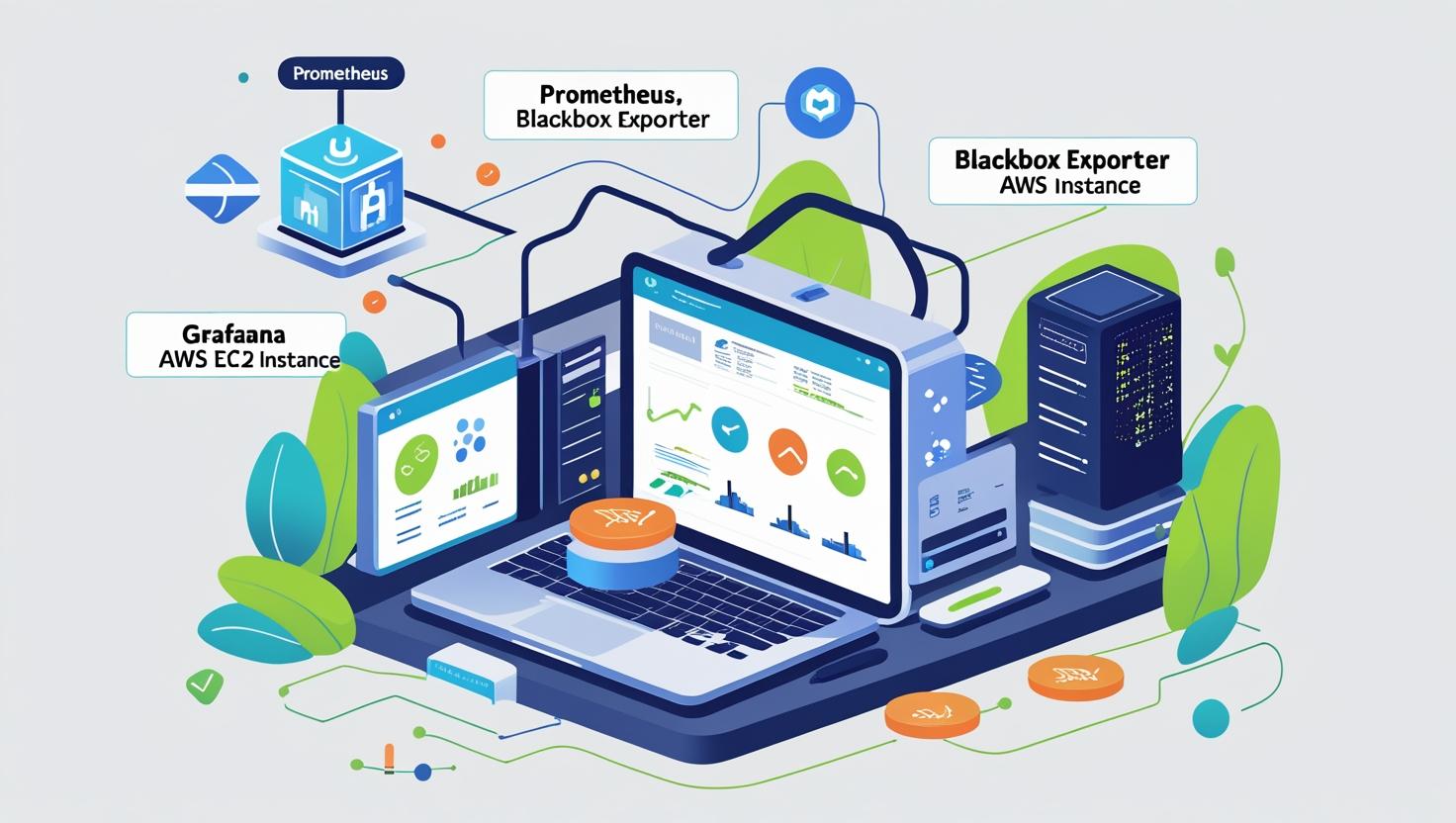
In today’s digital-first world, ensuring that your website and APIs are available and performing well is critical. A few minutes of downtime can result in lost customers, revenue, and trust. This blog explains how to set up Prometheus, Blackbox Exporter, and Grafana on an AWS EC2 instance to continuously monitor website uptime, SSL certificate validity, and response times with visual dashboards and alerts.

Problem

Businesses often face challenges in knowing when their websites or applications go down. Traditional monitoring tools can be expensive or complex to set up, leaving gaps in visibility. Without proper monitoring:

  • Downtime may go unnoticed until reported by users.

  • SSL certificates can expire unexpectedly.

  • Page load delays or DNS failures remain undetected.

The need for a reliable, open-source, and cost-effective solution to track website availability and performance metrics is clear.

Solution

By combining Prometheus for time-series data collection, Blackbox Exporter for probing website endpoints, and Grafana for visualization, you can build a robust monitoring solution that:

  • Continuously checks website uptime and response codes.

  • Monitors SSL expiry to prevent unexpected downtime.

  • Tracks latency, DNS resolution, and HTTP response times.

  • Provides real-time dashboards and alerting capabilities.

This solution is deployed on a Linux-based Ec2 instance and uses entirely open-source tools.

Prerequisites

Before starting, ensure you have the following:

  • An AWS EC2 instance (Ubuntu or Amazon Linux 2) with at least 2 GB RAM.

  • A domain or set of URLs you want to monitor.

  • Access to the EC2 instance via SSH.

  • Basic knowledge of Linux commands.

  • Ports 9090 (Prometheus), 9115 (Blackbox Exporter), and 3000 (Grafana) allowed in the EC2 Security Group.

Challenges

While implementing, you may encounter:

  • Firewall and Security Group restrictions preventing access to Grafana or Prometheus.

  • Incorrect scrape configurations in Prometheus resulting in no metrics collected.

  • CORS or SSL certificate errors when probing HTTPS websites.

  • Grafana authentication and datasource setup issues if not properly configured.

Scenario

Consider a financial services company that needs to ensure its customer-facing portal and API endpoints are always online. Using Prometheus and Blackbox Exporter, they want to:

  • Monitor their website URLs.

  • Receive early warnings if the SSL certificate is nearing expiry.

  • Visualize uptime history and response times in Grafana dashboards.

Step-by-Step Solution

1. Install Prometheus

Comments:

sudo useradd –no-create-home –shell /bin/false prometheus
sudo mkdir /etc/prometheus /var/lib/prometheus
sudo apt update && sudo apt install wget tar -y

cd /tmp
wget https://github.com/prometheus/prometheus/releases/download/v2.53.0/prometheus-2.53.0.linux-amd64.tar.gz
tar -xvf prometheus-2.53.0.linux-amd64.tar.gz
cd prometheus-2.53.0.linux-amd64/

sudo cp prometheus promtool /usr/local/bin/
sudo cp -r consoles console_libraries /etc/prometheus/
sudo cp prometheus.yml /etc/prometheus/prometheus.yml
sudo chown -R prometheus:prometheus /etc/prometheus /var/lib/prometheus

Create Prometheus service:

[Unit]
Description=Prometheus
Wants=network-online.target
After=network-online.target

[Service]
User=prometheus
ExecStart=/usr/local/bin/prometheus \
–config.file=/etc/prometheus/prometheus.yml \
–storage.tsdb.path=/var/lib/prometheus \
–web.listen-address=:9090 \
–web.enable-lifecycle

[Install]
WantedBy=multi-user.target

Enable and start:

sudo systemctl daemon-reexec
sudo systemctl enable prometheus
sudo systemctl start prometheus

2. Install Blackbox Exporter

cd /tmp
wget https://github.com/prometheus/blackbox_exporter/releases/download/v0.25.0/blackbox_exporter-0.25.0.linux-amd64.tar.gz
tar -xvf blackbox_exporter-0.25.0.linux-amd64.tar.gz
cd blackbox_exporter-0.25.0.linux-amd64/

sudo cp blackbox_exporter /usr/local/bin/
sudo mkdir /etc/blackbox_exporter
sudo cp blackbox.yml /etc/blackbox_exporter/

Create Blackbox service file as like below:

[Unit]
Description=Blackbox Exporter
After=network.target

[Service]
ExecStart=/usr/local/bin/blackbox_exporter \
–config.file=/etc/blackbox_exporter/blackbox.yml
Restart=always

[Install]
WantedBy=multi-user.target

Enable and start:

sudo systemctl daemon-reexec
sudo systemctl enable blackbox_exporter
sudo systemctl start blackbox_exporter

3. Configure Prometheus to Use Blackbox Exporter

Edit /etc/prometheus/prometheus.yml:

scrape_configs:
– job_name: ‘blackbox’
metrics_path: /probe
params:
module: [http_2xx]
static_configs:
– targets:
– https://example.com
– https://google.com
relabel_configs:
– source_labels: [__address__]
target_label: __param_target
– source_labels: [__param_target]
target_label: instance
– target_label: __address__
replacement: localhost:9115

Restart Prometheus:

sudo systemctl restart prometheus

4. Install Grafana

sudo apt-get install -y apt-transport-https software-properties-common
wget -q -O – https://packages.grafana.com/gpg.key | sudo apt-key add –
sudo add-apt-repository “deb https://packages.grafana.com/oss/deb stable main”
sudo apt-get update
sudo apt-get install grafana -y
sudo systemctl enable grafana-server
sudo systemctl start grafana-server

Access Grafana:

http://<EC2_PUBLIC_IP>:3000

(Default login: admin / admin)

5. Add Prometheus Datasource in Grafana

  • Go to Configuration → Data sources → Add data source

  • Select Prometheus

  • URL: http://localhost:9090

  • Save & Test

6. Import a Ready-made Blackbox Dashboard

  • Go to Dashboards → Import

  • Enter Dashboard ID: 7587

  • Select your Prometheus datasource

  • Click Import

You’ll now see uptime metrics including:

  • Status (UP/DOWN)

  • HTTP status code

  • SSL expiry

  • Response time and latency

Conclusion

With this setup, you now have a complete uptime monitoring solution using Prometheus, Blackbox Exporter, and Grafana on AWS EC2. This ensures you’re always aware of your website’s availability, SSL health, and performance without relying on expensive commercial tools.

Cogniv Technologies and Nunnari Labs Announce Strategic Collaboration to Deliver AI-Powered Cloud Solutions for Enterprises

Partnership combines Cogniv’s cloud and managed services expertise with Nunnari’s AIfirst product engineering capabilities to accelerate digital transformation.

Coimbatore, India – November 21, 2025

Coimbatore based Cogniv Technologies and Nunnari Labs today jointly announced a strategic collaboration to co-create and deliver enterprise-grade AI solutions built on secure, scalable cloud infrastructure.

The partnership will focus on bridging a critical gap many organizations face today —turning AI experimentation into operational reality. Together, the two firms will deliver a unified framework that makes it easier for businesses to design, deploy, and manage AI solutions that perform at scale.

What This Means for Clients

As artificial intelligence moves from experimentation to enterprise adoption, many organizations find themselves stuck between innovation and execution. Models may work in controlled environments, but scaling them securely, cost-eGectively, and in sync with existing systems remains a major hurdle.

The collaboration between Nunnari Labs and Cogniv Technologies aims to close that gap. Nunnari brings the depth of AI research, model development, and product engineering, while Cogniv provides the cloud backbone, DevOps discipline, and managed operations needed to make those AI systems run reliably at scale. Together, they oGer enterprises a practical path to bring AI into the core of their business – one that ensures performance in the real world, not just in prototypes.

For clients, this means dependable AI that integrates smoothly with their cloud environments, scales with demand, and adheres to the highest standards of transparency, security, and sustainability. More than just accelerating deployment, the partnership helps organizations translate innovation into measurable business outcomes.

The Collaboration

Through this partnership, both companies will jointly design and deploy solution accelerators across sectors such as manufacturing, healthcare, retail, and logistics. Clients will benefit from integrated oGerings that combine AI model development, cloud architecture, edge deployment, and ongoing managed services under one unified framework.

“Our partnership with Nunnari Labs is a strategic leap towards turning innovative AI concepts into real enterprise impact,” said Jeswanth Vijay, CEO, Cogniv Technologies. “Cogniv’s cloud and data expertise, combined with Nunnari’s cutting-edge AI engineering, will empower clients to scale AI solutions seamlessly. This is about transforming experimentation into execution and delivering future-ready AI Solution for business growth.”

Nunnari Labs’ core focuses on inclusive AI aligned with global standards like OECD.AI and NIST, adding a strong ethical dimension to the collaboration. Together, the two companies will help enterprises modernize infrastructure, automate operations, and embed intelligence into business processes without compromising on data security, transparency, or performance.

“At Nunnari Labs, our goal has always been to make advanced AI accessible, enterpriseready, and responsible. Partnering with Cogniv Technologies is a natural extension of that mission. Cogniv’s strength in cloud transformation perfectly complements our AI engineering expertise, allowing us to create solutions that are both scalable and impactful. Together, we’re building a future-ready ecosystem where cloud and AI converge to deliver real value for enterprises,” said Navaneeth Malingan, Founder & CEO, Nunnari Labs.

The timing of this collaboration reflects a broader market shift. As enterprises increasingly adopt GenAI, automation, and data-driven decision frameworks, the need for dependable infrastructure and ethical AI design has never been greater.

Both companies plan to launch joint solution frameworks and proof-of-concept projects in early 2026, followed by client onboarding and industry-specific AI accelerators blending innovation with accountability.
————————————————————————————————————–

About Cogniv Technologies

Cogniv Technologies is a technology consulting and services firm focused on cloud transformation, managed services, and DevOps. The company helps enterprises modernize their IT infrastructure, improve scalability, and ensure 24/7 reliability through customized cloud and automation solutions.

Learn more at www.cognivtech.com.

About Nunnari Labs

Nunnari Labs is an AI-first R&D and product engineering company dedicated to creating intelligent, sustainable, and human-centric technology solutions. With expertise spanning AI/ML, computer vision, MLOps, and intelligent industrial automation, the company works with global enterprises and research partners to turn advanced AI concepts into scalable business products.

Learn more at www.nunnarilabs.com.

The Challenge: Building a Digital Foundation

Customer team faced several hurdles at the start of their digital journey:

  • Uncertainty around hosting platforms
  • Scalability limitations and potential downtime
  • Lack of automated deployment and monitoring tools
  • Security vulnerabilities due to manual configurations

These challenges threatened to delay their online launch and compromise user experience during peak hours.

The Solution: AWS Elastic Container Service + CI/CD Automation

To overcome these obstacles, Cogniv Technologies implemented a fully automated, cloud native solution using AWS Elastic Container Service and a CI/CD pipeline

How the Partner Resolved the Customer Challenge

Designed a Fully Automated 3-Tier Architecture 

Utilized AWS CloudFormation to provision infrastructure as code. Included a secure VPC, application layer (Elastic Container Service), and database layer (Amazon RDS).

Implemented Secure Networking:

Deployed resources within a custom VPC for isolated and secure network access.Placed the RDS database in private subnets to protect sensitive data.

Deployed Scalable Application Hosting:

Used AWS Elastic Container Service to host the Dockerized application. Enabled automatic scaling, load balancing, and health monitoring.

Integrated GitHub for Source Control:

Enabled seamless version control and collaboration. Ensured traceability and transparency in code change

Established CI/CD Pipeline:

Configured AWS CodePipeline and CodeBuild for automated builds and deployments. Enabled continuous integration and delivery with minimal manual intervention.

Streamlined Deployment Workflow:

Automated the entire release process from code commit to production deployment. Reduced downtime and manual errors, ensuring consistent and reliable updates.

Enhanced Operational Efficiency:

Eliminated manual overhead, allowing the team to focus on innovation. Improved deployment speed and system reliability.

DevOps in Action: Practices That Powered the Transformation

Version Control: GitHub integration enabled seamless collaboration and change tracking.

CI/CD Pipelines: Automated deployment workflows ensured rapid, reliable software delivery.

Infrastructure as Code (IaC): AWS CloudFormation enabled consistent, version-controlled environment provisioning.

Technical Results:

– 85% faster deployments  from days to minutes
– Zero downtime during deployments
– 90% reduction in human error through automation
– 100% infrastructure consistency with IaC
– Improved scalability during peak traffic
– Shift from maintenance to innovation for the dev team


Lessons Learned:

– Plan network architecture early to ensure security and scalability.

– Automate everything — from infrastructure to deployments.

– Use managed services to reduce complexity and operational overhead.

– Integrate monitoring and security from the start.

About the Partner: Cogniv Technologies

Cogniv Technologies is an AWS Advanced Tier Partner specializing in:

– Cloud-native architecture

– DevOps and CI/CD automation

– FinOps and cloud cost optimization

Their customer-first approach and deep AWS expertise made them the ideal partner for Sanika’s digital transformation.

Conclusion:

Customer successfully transitioned from a manually managed setup to a modern, scalable cloud platform. With AWS and Cogniv Technologies, they now deliver a seamless digital experience that matches the excellence of their in-person dining  setting the stage
for future growth and innovation.

In the fast-evolving world of EdTech, agility, scalability, and reliability are non-negotiable. Vidysea, a platform dedicated to guiding professionals through their higher education journey, recognized this early. As their user base expanded and application complexity grew, they needed a robust infrastructure to match their ambitions. Here’s how they transformed their architecture with the help of AWS and Cogniv Technologies.

The Challenge: From Static Hosting to Scalable Infrastructure

Initially hosted on Vercel and later AWS Amplify, Vidysea faced growing pains:
– Performance bottlenecks during peak usage
– Limited autoscaling for backend services
– Manual infrastructure management leading to downtime
– Deployment inefficiencies slowing down feature delivery

These challenges highlighted the need for a more scalable, resilient, and automated solution.

The Solution: Migrating to Amazon EKS with Cogniv Technologies

To meet these demands, Vidysea partnered with Cogniv Technologies, an AWS Advanced Tier Partner, to re-architect their platform using Amazon Elastic Kubernetes Service (EKS).

Key Components of the Solution:

Microservices Architecture: Transitioned from monolithic to containerized microservices using Docker and EKS.
CI/CD Pipelines: Automated deployments with GitHub-integrated pipelines for faster, error-free releases.
Container Registry: Used Amazon ECR for secure and scalable image storage.
Database Management: Leveraged Amazon RDS for PostgreSQL to ensure high availability and simplified scaling.
Security & Monitoring: Integrated AWS WAF, CloudWatch, and ALB for robust security and observability

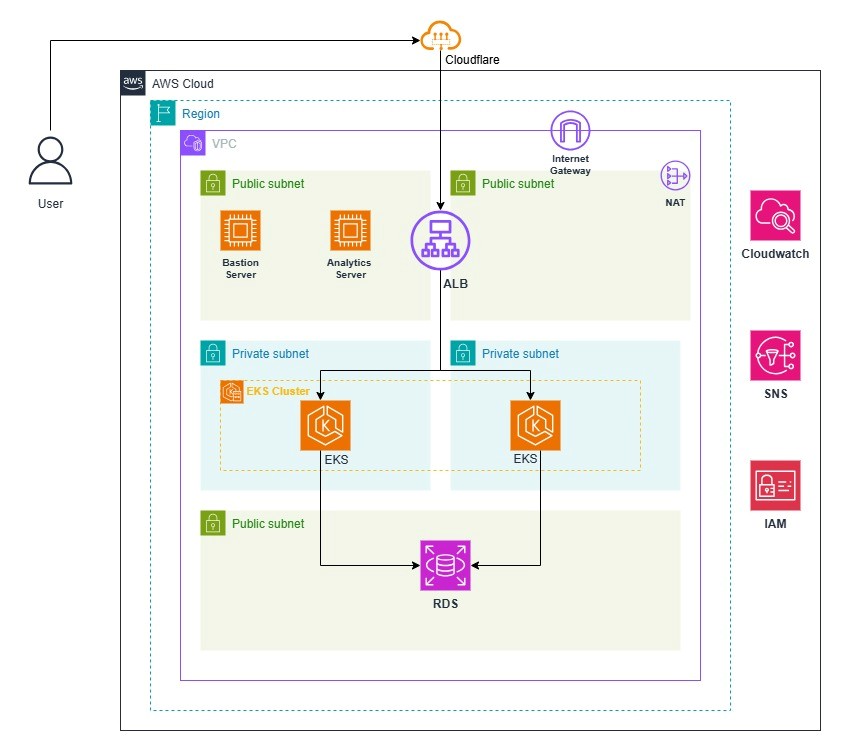
Solution and AWS Architecture Design:

Cogniv Technologies collaborated closely with Vidysea to devise a customized product strategy aligned with their DevOps goals. Harnessing AWS’s best practices, we architected a resilient infrastructure to support Vidysea’ microservices architecture and facilitate future enhancements.


Key DevOps Practices Implemented:

Version Control

  • Integrated GitHub for managing application code.
  • Enabled seamless collaboration and meticulous change tracking.
  • Ensured transparency and accountability throughout development.

Continuous Integration (CI) and Continuous Delivery (CD)

  • Established CI/CD pipelines for automated build, package, and deployment.
  • Enabled rapid and reliable delivery of microservices to Amazon EKS.
  • Reduced manual errors and accelerated release cycles.

Containerization

  • Adopted Docker for consistent deployment environments.
  • Used Amazon EKS for scalable container orchestration.
  • Stored Docker images in AWS Elastic Container Registry (ECR) for simplified deployment and environment consistency.

AWS Services in Action

                               Service                                          Role
                  Amazon EKS Orchestrates containerized workloads with high availability
                  Amazon RDS Manages PostgreSQL databases with automated backups
                  Amazon S3 Stores application assets and backups securely
                  Amazon EC2 Provides scalable compute resources
                  AWS WAF Protects against common web exploits
                  Amazon ECR Hosts Docker images for seamless deployment
                  CloudWatch Monitors application health and performance

Technical Results

The transformation delivered measurable improvements:
– 90% reduction in deployment time
– 2x increase in deployment frequency (up to 10/day)
– 75% less manual intervention, reducing human error
– 20 hours/week saved per engineer
– 60% faster time-to-market for new features


———————————————————————————————-

Cogniv Tech transformed our deployment process – fast, reliable, and always available when needed   

-Manish Kumar

Director ,Vidysea 


Lessons Learned

– Containerization is key: Moving to Docker and EKS enabled better scalability and fault isolation.
– Automation accelerates innovation: CI/CD pipelines drastically improved deployment speed and reliability.
– Cloud-native architecture pays off: The shift to microservices empowered Vidysea to respond faster to user needs and security threats.

Cost Comparison: Amplify vs. EKS


Setup Monthly Cost Annual Cost
AWS Amplify (Legacy) $74.71
AWS EKS (New) $383.74 $4,604.88

About the Partner: Cogniv Technologies

Cogniv Technologies brings deep AWS expertise, industry knowledge, and a customer-first approach. As an AWS Advanced Tier Partner they specialize in:
– Cloud-native architecture
– DevOps and automation
– FinOps and cost optimization

Conclusion

Vidysea’s journey from static hosting to a dynamic, microservices-driven platform on AWS EKS is a testament to the power of cloud transformation. With Cogniv Technologies as their guide, they’ve built a future-ready platform that scales with their mission: empowering learners worldwide.