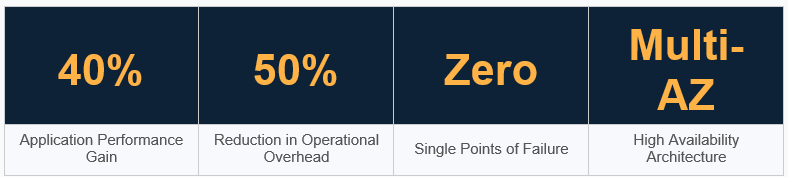
Key Results at a Glance
Executive Summary
As organizations scale their digital operations, the demand for reliable, high-performance, and secure cloud infrastructure becomes non-negotiable. Naga, a technology-driven organization running business-critical workloads on AWS, faced growing pains common to fast-scaling teams — infrastructure that could not keep pace with demand, reactive monitoring practices, and security configurations that introduced unnecessary risk.
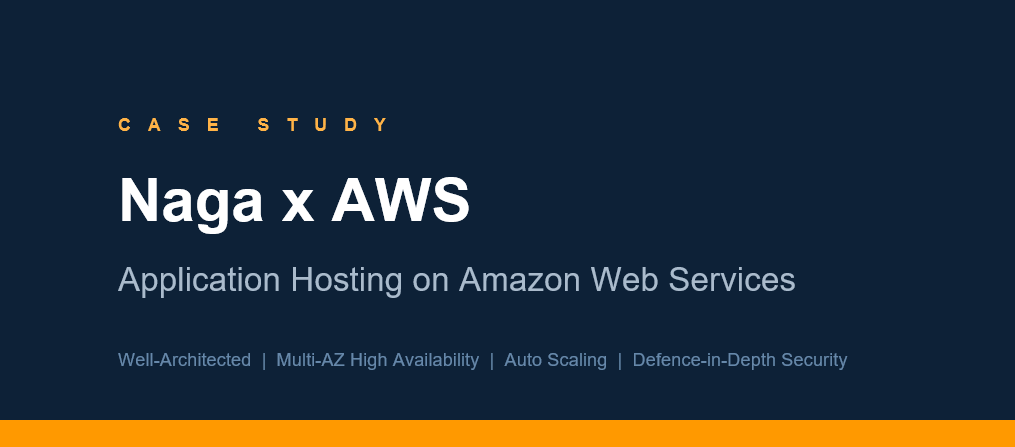
Cogniv Technologies partnered with Naga to redesign and optimize their AWS environment from the ground up. Leveraging AWS Well-Architected best practices, Cogniv delivered a modern, resilient architecture spanning automated scaling, multi-availability zone redundancy, layered security, and comprehensive operational visibility. The result was a measurably stronger platform that supports Naga’s current workloads and positions the organization for continued growth.
About the Customer
Naga is a technology and cloud services organization that depends on AWS to host and deliver business-critical application workloads. With a growing customer base and increasing complexity in its operational environment, Naga required a cloud infrastructure capable of handling variable demand reliably while maintaining strong security and operational control.
The Challenge
Before engaging Cogniv Technologies, Naga’s AWS environment faced two fundamental challenges that were limiting performance, increasing risk, and creating unnecessary operational burden.
Challenge 1: Scalability and Performance Under Peak Load
Naga’s infrastructure relied on manual capacity management. During periods of high user demand, this approach led to performance degradation as the environment could not respond quickly enough to sudden increases in traffic. Conversely, during quieter periods, resources remained over-provisioned, leading to avoidable cloud spend. There was no automated mechanism to align compute capacity with actual workload in real time, leaving the operations team constantly reacting rather than proactively managing the environment.
Challenge 2: Monitoring, Backup, and Security Gaps
The team operated with reactive monitoring — issues were identified only after users reported degraded experiences or system failures. Backup policies were incomplete, leaving certain data assets without adequate protection. Security groups were broadly defined, expanding the attack surface unnecessarily. IAM configurations lacked granularity, granting more permissions than individual services required. Together, these gaps created operational fragility and compliance risk that needed to be addressed before further growth.
The Solution
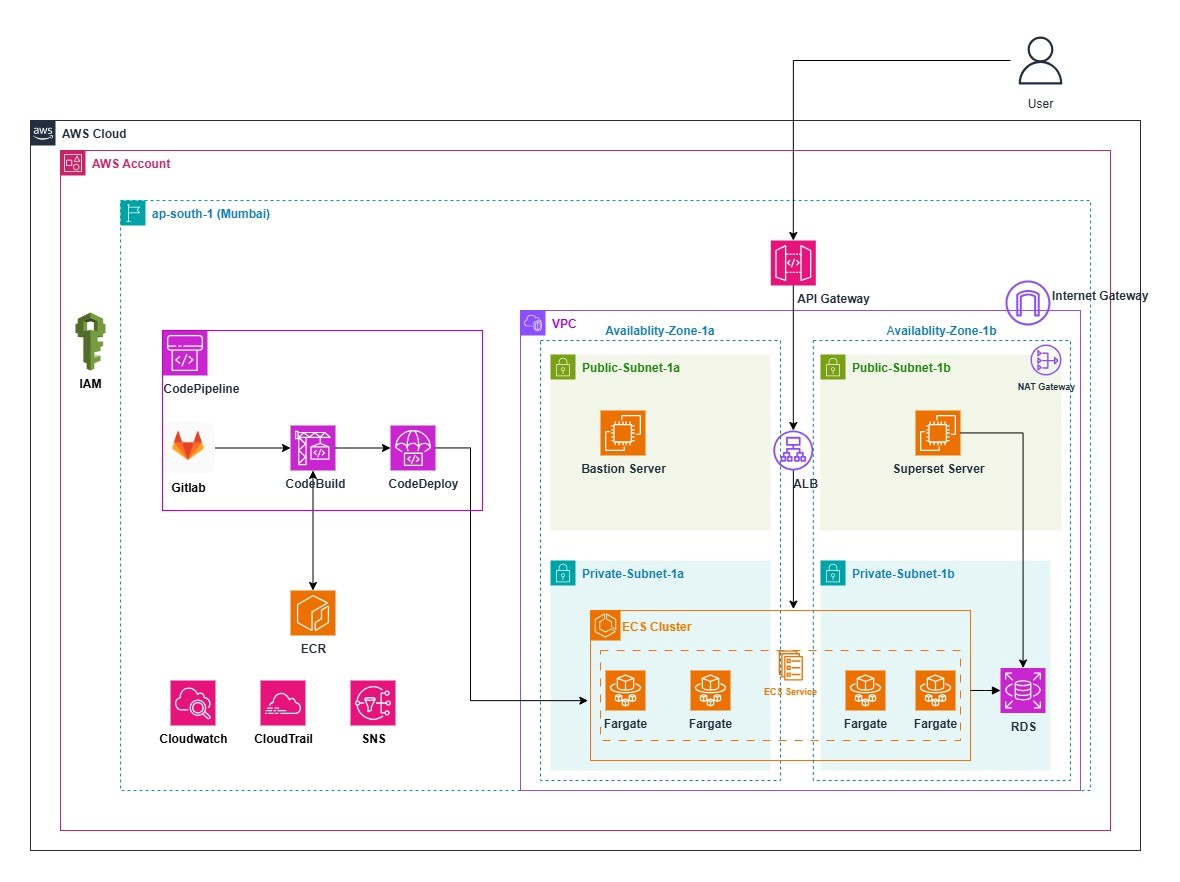
Cogniv Technologies designed and implemented a comprehensive AWS architecture that addressed each challenge systematically, applying AWS Well-Architected principles across the five pillars of operational excellence, security, reliability, performance efficiency, and cost optimization.
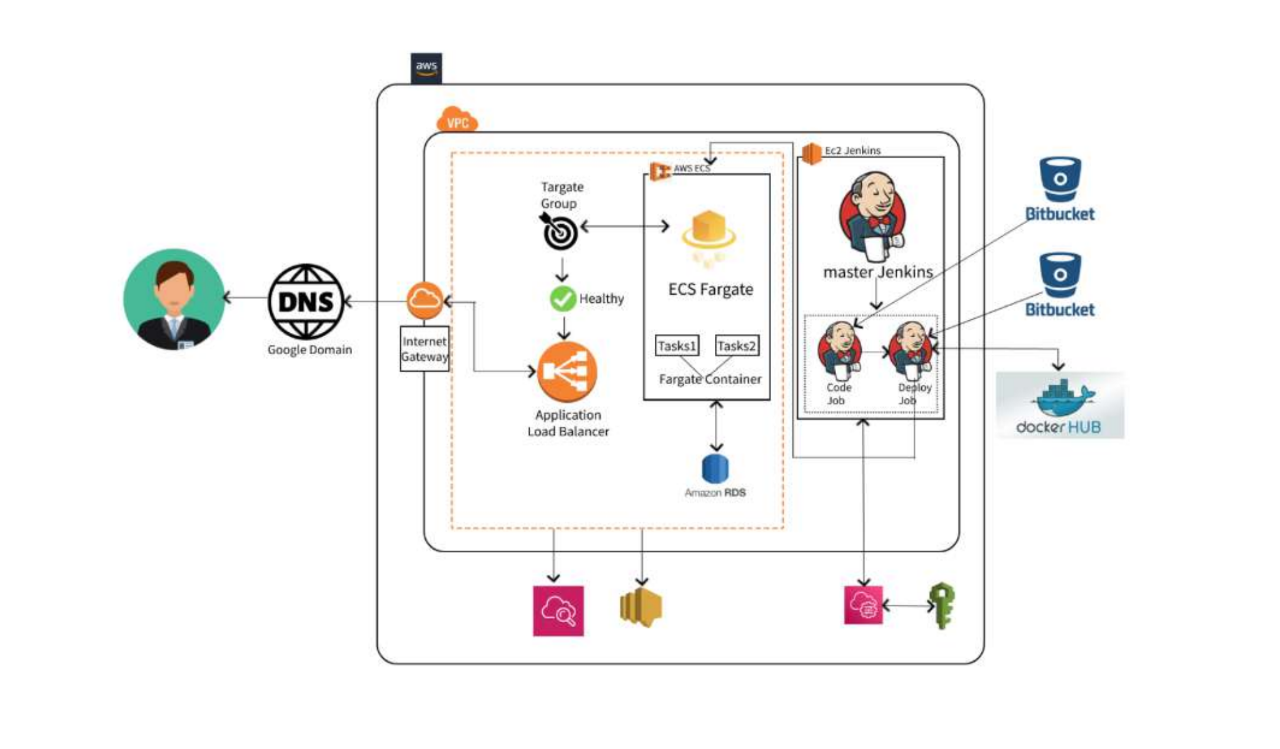
Amazon EC2 with Auto Scaling
Right-sized EC2 instances were deployed within Auto Scaling groups configured with dynamic scaling policies. Policies are triggered by CPU utilization and Application Load Balancer request count metrics, enabling the environment to adjust capacity automatically and in real time. This eliminates manual intervention during traffic spikes and prevents over-provisioning during low-demand periods.
Application Load Balancer
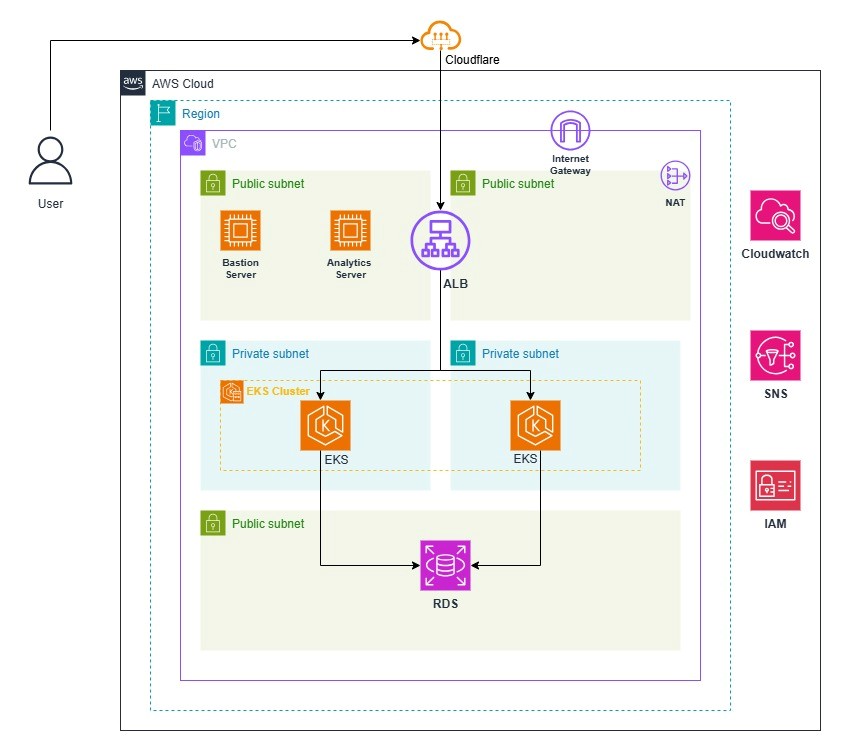
An Application Load Balancer was deployed to distribute HTTP and HTTPS traffic across EC2 instances spanning multiple Availability Zones. Health checks continuously monitor target availability, automatically routing traffic away from unhealthy instances. This ensures that no single instance failure degrades the user experience.
Amazon RDS Multi-AZ with Read Replicas
A managed relational database was deployed in a Multi-AZ configuration, providing automatic failover in the event of a primary instance failure. Seven-day automated backup retention ensures data protection and recovery capability. Read replicas were introduced to offload read-heavy query workloads from the primary instance, improving overall database performance and reducing response times for application queries.
VPC Architecture with Least-Privilege IAM
The network was restructured with dedicated public and private subnets per application tier, enforcing logical separation between internet-facing and internal components. Security Group rules were tightened to enforce least-privilege access, reducing the attack surface across all tiers. Per-service IAM roles were introduced, ensuring that each component operates with only the permissions it requires. This layered approach to security creates defense-in-depth across the entire environment.
Amazon CloudWatch
A unified monitoring layer was implemented using CloudWatch, including custom dashboards, metric-based alarms, and structured log groups. This provides the operations team with real-time visibility into application and infrastructure health, enabling proactive detection and faster response to operational events.
AWS Backup and Amazon S3
Policy-driven automated backup schedules were implemented for RDS instances and EBS volumes using AWS Backup. Amazon S3 was configured with lifecycle policies, server-side encryption, and versioning to provide a secure and cost-efficient object storage layer for the environment.
Architecture Highlights
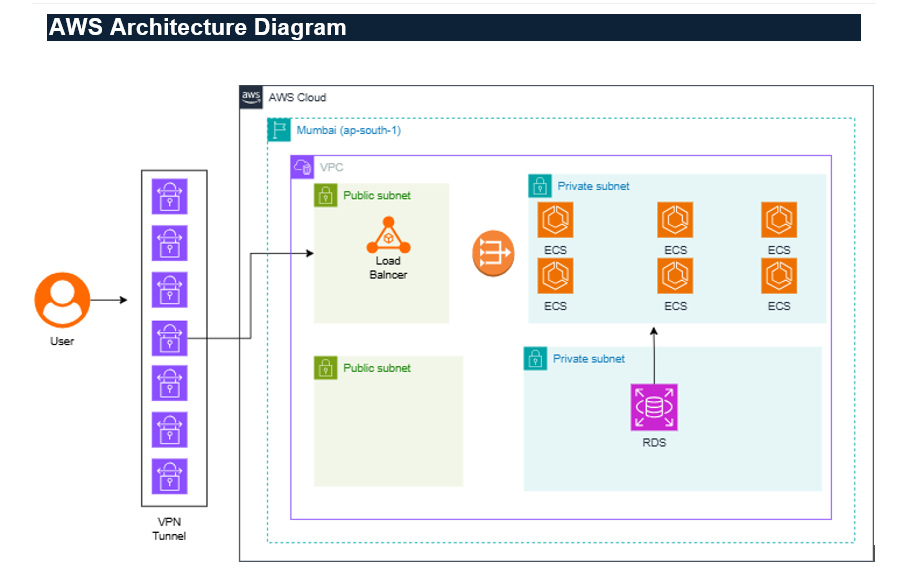
Multi-AZ High Availability
Application and database tiers span multiple Availability Zones, eliminating single points of failure and ensuring uninterrupted service availability during Availability Zone-level disruptions.
Auto Scaling Elasticity
EC2 capacity adjusts dynamically based on real-time demand signals. The environment scales out during traffic peaks and scales in during quiet periods, delivering consistent performance without cost waste.
Defense-in-Depth Security
Private-subnet network isolation, tightened Security Group rules, and per-service IAM roles enforce layered security controls across every tier of the architecture.
Comprehensive Observability
CloudWatch dashboards and alarms provide full visibility into system health and performance, reducing mean time to detection and enabling proactive incident response before users are impacted.
Results and Business Impact
The redesigned AWS environment delivered measurable improvements across performance, reliability, security, and operational efficiency.
Key Architecture Decisions That Made the Difference
The success of this engagement was rooted in a set of deliberate architectural decisions that prioritized long-term operational health over short-term convenience.
Deploying Auto Scaling and Multi-AZ from the outset eliminated the need for manual scaling intervention and guaranteed database resilience without operator involvement. Establishing CloudWatch as a foundational requirement — not an afterthought — gave the operations team the visibility needed to move from reactive to proactive management. Defining VPC subnet boundaries and IAM roles early in the engagement reduced the complexity of security reviews and future compliance validation.
Lessons Learned
This engagement reinforced several best practices that Cogniv Technologies now applies as standard across all AWS infrastructure engagements.
-
Build Auto Scaling and Multi-AZ redundancy into the initial architecture. Retrofitting these capabilities into an existing live environment is significantly more complex and risk-prone than implementing them from the start.
-
Treat CloudWatch as a foundational infrastructure component. Reactive monitoring consistently prolongs application degradation and delays incident resolution.
-
Define VPC subnet boundaries and tier separation early. Clear network segmentation simplifies both security reviews and ongoing compliance requirements.
-
Invest in IAM role design and Security Group definition at the beginning of an engagement. Overly permissive configurations are difficult to tighten after the fact without risking disruption to running workloads.
About Cogniv Technologies
Cogniv Technologies is an AWS Advanced Tier Partner specializing in cloud infrastructure design, application hosting, DevOps, FinOps, data management, and cloud-based communication solutions. The team brings deep AWS expertise and a consistent commitment to delivering Well-Architected, secure, and cost-optimized cloud environments for customers across industries.
Cogniv Technologies is recognized under the AWS Well-Architected Partner Program, reflecting the team’s technical capability and commitment to AWS best practices.